

What is a Goshiwon? The Budget Housing Only Korea Has
Everything foreigners need to know about goshiwon (고시원) — Korea's unique budget housing. Room types, prices, pros & cons, and what to expect.
What Exactly is a Goshiwon?
A goshiwon (고시원) is a type of budget housing unique to South Korea. Originally designed for students preparing for civil service exams (goshi/고시), these compact rooms have evolved into one of the most affordable housing options in Korea.
Think of it as something between a dormitory and a studio apartment — you get your own private room (usually 3-7㎡) with shared or private bathrooms, and often free rice and kimchi.

Room Types in a Goshiwon
Goshiwon rooms come in three main types based on bathroom access:
| Room Type | Monthly Rent | Bathroom | Features |
|---|---|---|---|
| Mini Room (미니룸) | ₩250,000–350,000 | Shared bathroom & shower | Smallest and cheapest option. Bathroom and shower are in the hallway, shared with other residents. |
| Shower Room (샤워룸) | ₩350,000–450,000 | Private shower only | Has a shower inside your room, but toilet is shared in the hallway. A good middle ground. |
| One-Room Type (원룸형) | ₩450,000–650,000 | Private bathroom (toilet + shower) | Has a full private bathroom like a studio apartment. Most comfortable but priciest. |
Additionally, many goshiwon offer Women-Only (여성전용) floors or buildings (₩300,000–500,000) with enhanced security features like separate entrances and CCTV.
Tip: If budget is tight, start with a Mini Room. If privacy matters, the Shower Room is a great compromise — you get your own shower but save ₩100,000+/month compared to One-Room Type.
What's Usually Included
- Furniture: Bed, desk, small wardrobe, AC/heater
- Utilities: Electricity, water, internet (usually free — included in monthly rent)
- Free food: Rice, kimchi, ramen (varies by place)
- Shared facilities: Kitchen, laundry, shower rooms
Not included: Towels, bedding (some provide, some don't), toiletries
Pros & Cons for Foreigners
| Pros ✅ | Cons ❌ |
|---|---|
| No or low deposit (₩0–500,000) | Very small rooms |
| Move in immediately | Thin walls, noise issues |
| All utilities included | Limited cooking facilities |
| Month-to-month contracts | Some don't accept foreigners |
| Central locations near universities | No guests allowed (usually) |
How to Find a Goshiwon on RoomRoom
On RoomRoom, you can search for goshiwon near any university or subway station in Korea. Use the map view to see exact locations, compare prices, and message hosts directly — all in English.
Look for tags like "Women-Only" or "Private Bathroom" on listings to find the right fit.
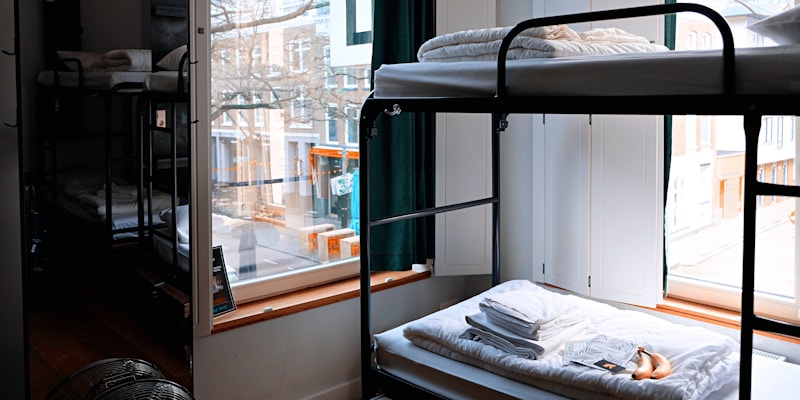
Daily Life in a Goshiwon
Living in a goshiwon is a unique experience that takes some adjustment. Here is what a typical day looks like for residents:
Morning routine: If you're in a Mini Room (shared facilities), there are usually 2-4 shower stalls per floor — peak times are 7:00-8:30 AM on weekdays, so early risers have an advantage. If you chose a Shower Room or One-Room Type, you have your own shower or full bathroom right in your room, so mornings are much more relaxed. Either way, the free rice cooker is usually stocked by 7 AM, and you can grab a quick breakfast of rice, kimchi, and instant ramen before heading out.
Working and studying: Your room is your workspace. Most rooms have a small desk with a lamp, and the WiFi is typically fast enough for video calls and streaming. Some premium goshiwon have communal study rooms or co-working areas on the ground floor with better chairs and larger desks.
Cooking and meals: The shared kitchen usually has a microwave, rice cooker, and basic cooking utensils. However, most goshiwon have strict rules about cooking smells — frying meat or fish in the shared kitchen is generally frowned upon. Many residents rely on delivery food, convenience store meals, or the affordable restaurants near campus (university cafeterias serve meals for ₩3,000-5,000).
Laundry: Most goshiwon have coin-operated washing machines (₩1,000-2,000 per load) and sometimes free-to-use machines. Dryers are less common — many residents hang clothes in their room or on a shared rooftop drying area. Budget ₩10,000-20,000 per month for laundry if coin-operated.
Socializing: Goshiwon are generally quiet environments. Noise rules are strict (usually silence after 10 PM), and bringing guests to your room is typically prohibited. Common areas like the kitchen or lounge (if available) are where you will interact with neighbors, but most residents keep to themselves.
Package delivery: Korea has an incredibly fast delivery system (often same-day). Packages are usually left at the front entrance or with the building manager. Make sure you know the building address in Korean for delivery orders.
Goshiwon Etiquette and Rules
Every goshiwon has house rules, and breaking them can get you asked to leave (often with no deposit refund). Here are the universal rules you should know:
- Noise curfew: Most goshiwon enforce quiet hours from 10 PM to 7 AM. This means no phone calls, no loud music, and even keeping TV/video volume to headphone-only levels. The walls are thin — your neighbors can hear everything.
- No guests: The majority of goshiwon strictly prohibit visitors in your room. Some have a small lounge area where you can meet friends briefly. If caught bringing someone to your room, you may receive a warning or immediate eviction.
- Kitchen etiquette: Clean up immediately after cooking. Label your food in the shared fridge (unlabeled items may be thrown away). Do not cook strong-smelling foods like fish or durian. Shared condiments and rice are for everyone — do not take excessive amounts to your room.
- Bathroom sharing: Keep showers under 15-20 minutes during peak times. Clean hair from drains. Do not leave personal items in shared bathroom spaces — use a shower caddy.
- Smoking: Almost all goshiwon are strictly non-smoking indoors. Some have designated outdoor smoking areas. Smoking in your room will result in a fine (usually ₩100,000-300,000) deducted from your deposit.
- Trash separation: Korea has strict recycling rules. You must separate trash into general waste (종량제 봉투), recyclables (plastics, paper, cans), and food waste (음식물 쓰레기). Your goshiwon will have designated bins — ask the manager to explain them on day one.
- Payment: Monthly rent is due on the same date each month (your move-in date). Late payments may result in late fees or eviction after repeated offenses. Most accept bank transfer — ask for the account number and set up automatic transfers.
How Much Should You Budget?
Here is a realistic monthly budget breakdown for living in a goshiwon in Seoul (2026 prices):
| Expense | Basic Goshiwon | Premium Goshiwon |
|---|---|---|
| Rent (all utilities included) | ₩300,000-400,000 | ₩450,000-600,000 |
| Food (meals not from goshiwon) | ₩200,000-400,000 | ₩200,000-400,000 |
| Transportation (T-money) | ₩50,000-80,000 | ₩50,000-80,000 |
| Phone (prepaid SIM) | ₩30,000-50,000 | ₩30,000-50,000 |
| Laundry | ₩10,000-20,000 | ₩0 (free machines) |
| Personal/Entertainment | ₩100,000-200,000 | ₩100,000-200,000 |
Total monthly budget: ₩690,000-1,150,000 (approximately $500-$850 USD)
Money-saving tips:
- Take advantage of the free rice and kimchi — it saves ₩50,000-100,000/month on food
- University cafeterias offer meals for ₩3,000-5,000, much cheaper than restaurants
- Buy a monthly transportation pass (정기권) for ₩55,000 if you commute daily on the same route
- Many goshiwon offer discounts for 3+ month contracts (₩20,000-50,000 off per month)
- Areas like Sillim (신림), Noryangjin (노량진), and Guro (구로) have the cheapest goshiwon in Seoul
Real Student Experiences
Here are real accounts from foreign students who lived in Korean goshiwon:
Maria, 23, exchange student from Spain (Sinchon area, 6 months):
"My room was literally 3 meters by 2 meters — just enough for a single bed, a tiny desk, and a wardrobe. But honestly, it was perfect for my needs. I was at university or exploring Seoul all day, and I only needed a place to sleep and study at night. The free rice saved me so much money. My total monthly spending was about ₩800,000 including everything."
James, 27, language school student from Canada (Anam area, 4 months):
"The hardest thing was the noise. I could hear my neighbor alarm clock, phone conversations, everything. I started sleeping with earplugs and it made a huge difference. The location was unbeatable though — 3 minutes from the subway, surrounded by cheap food options. I paid ₩350,000/month with no deposit."
Yuki, 21, graduate student from Japan (Nakseongdae area, 1 year):
"I upgraded from a basic goshiwon to a premium one after 2 months. The private bathroom was worth the extra ₩150,000/month. My advice: visit at least 3-4 places before deciding. The difference in quality between goshiwon is huge, even at similar prices. Check online reviews on Naver (search: 고시원 후기 + area name)."
Common themes from residents:
- First week is the hardest — the small space takes adjustment
- Earplugs and eye masks are essential purchases
- Making friends is harder than in sharehouses but not impossible — communal kitchen is the social hub
- Most foreigners stay 3-6 months before either leaving Korea or upgrading to a one-room
Questions to Ask Before Moving In
Before you sign anything or hand over money, visit the goshiwon in person and ask these questions:
- Can I see the exact room I will be staying in? (Not a similar room — THE room)
- What is included in the monthly rent? (Utilities, internet, food, laundry)
- What are the quiet hours? (And how strictly are they enforced?)
- Is there a minimum contract period? (Some require 1-3 months minimum)
- How much notice do I need to give before moving out? (Usually 2-4 weeks)
- What happens to my deposit if I leave early? (Some forfeit it entirely)
- Do you accept foreigners? (Sadly, some do not — ask upfront to save time)
- Can I receive mail and packages here? (Important for online shopping)
- Is there CCTV in common areas? (Security indicator)
- What floor is the room on? (Ground floor = noisier; top floor = hotter in summer)
- Are there any additional fees? (Cleaning fee, key deposit, etc.)
- What is the building address in Korean? (You will need this for deliveries)
Red flags to watch for:
- The manager will not show you the actual room
- Strong musty or mold smell in hallways
- Broken or dirty shared facilities
- No fire extinguisher or emergency exit signs
- Manager asks for cash only (no bank transfer option)
- Other residents look unhappy or uncomfortable
Pro tip: Visit between 6-9 PM on a weekday to see the building at its busiest. You will get a realistic sense of noise levels, bathroom wait times, and the general atmosphere.